Thursday, January 7, 2021

A Lower Thermostat = A Happier Life?

I recently read an interesting BrightNest article on the scientifically-backed benefits of lowering your thermostat.  Here are some of the ways that the experts say lowering your thermostat a few notches can improve your life:
  • Go below 65 degrees and extend the life of your fridge. THE LOGIC? Assuming that as your home is cooler, the fridge doesn't have to work as hard, translating into fewer potential maintenance problems and an overall longer appliance lifespan...in theory.
  • If you want a better night’s sleep, lower your home’s temperature to 65 or below. THE LOGIC? Sleep scientists say that in a cooler environment the temperature your brain needs to reach before going to sleep is reached more quickly, and you fall asleep faster and stay asleep longer...for most people (Note: Personally, I DO buy this one -- I have to be a bit chilly to have a really nice sleep cycle, and have my best sleep blocks in hotel rooms where I can make it super cold).
  • Shed a few pounds by dropping your thermostat below 70 degrees. THE LOGIC? The thinking goes that as the temperature drops, your energy expenditure/internal furnace activity increases, so you burn more calories. Over a period of several weeks, experts theorize that increased energy can translate into an extra 3,500 calories burned, which means one lost pound....maybe? 
  • And of course the biggest life improvement of all, lowering the interior home temp = Electric bill savings. THE LOGIC? Power companies all agree that each single degree drop in your hold temperature can reduce your energy bill by as much as 1-3%...3% of a $300 power bill is only about $9, but when you go from that single degree adjustment to five or more, the savings each month will really start to add up. Want to test the theory but not ready to go all-in or resolve to wearing a parka in your kitchen? Consider only dropping household temps at night and while you’re at work, taking full advantage of your programmable thermostat.
Want more info on energy savings? Curious about your home and what you can do today to become more efficient and save a few bucks each month? Here in Frederick County and bordering counties, check out the following local energy resources:
Already experienced positive results from keeping it cool? Have other ideas on life improvements related to keeping that thermostat in check or energy conservation? Share your thoughts with us!  

Sunday, November 12, 2017

NEW Radon Test Requirement in Montgomery County, Maryland as of 10/1/2016


Did you know there is a new requirement for radon testing in Montgomery County as of October 1, 2016?
What does the new rule mean for home sales in that area?

Effective October 1, 2016 Montgomery County, MD requires a single-family home located in the County must be tested for radon before completing a sale of the home.”  This requirement is contained in Chapter 40 of the County Code, as amended by County Bill 31-15.  This requirement applies throughout the county, except in the Towns of Barnesville, Kensington and Poolesville, and the City of Rockville.

The law requires the seller to perform the radon test, OR permit the buyer to perform the radon test.  If the seller offers the buyer the opportunity to do the test, and the buyer chooses not to, the seller must perform the test to meet the statutory requirement that a test be performed.  Both the seller and the buyer must receive a copy of the results of the radon test. The test may be done by the seller, buyer, or a third party (for example a home inspector or radon testing professional) using an approved testing device. (Source: http://www.montgomerycountymd.gov/DEP/air/radon.html) 

What does this mean to potential home buyers and sellers?

Mike Benner, owner of Benner GeoTech Radon Services, Inc., believes disclosure of radon test results gives the buyers a peace of mind when purchasing one of their largest investments they will ever make. For the seller, Mike recommends testing as you are putting your house on the market.  Inexpensive do it yourself tests, like the Kidde Radon Detection kit can be purchased from local hardware stores, or a homeowner can have a test performed by a local radon testing company or home inspector. This testing gives the sellers piece of mind and the ability to provide the necessary documentation to comply with the new law. 
So what is radon, and why does it matter?
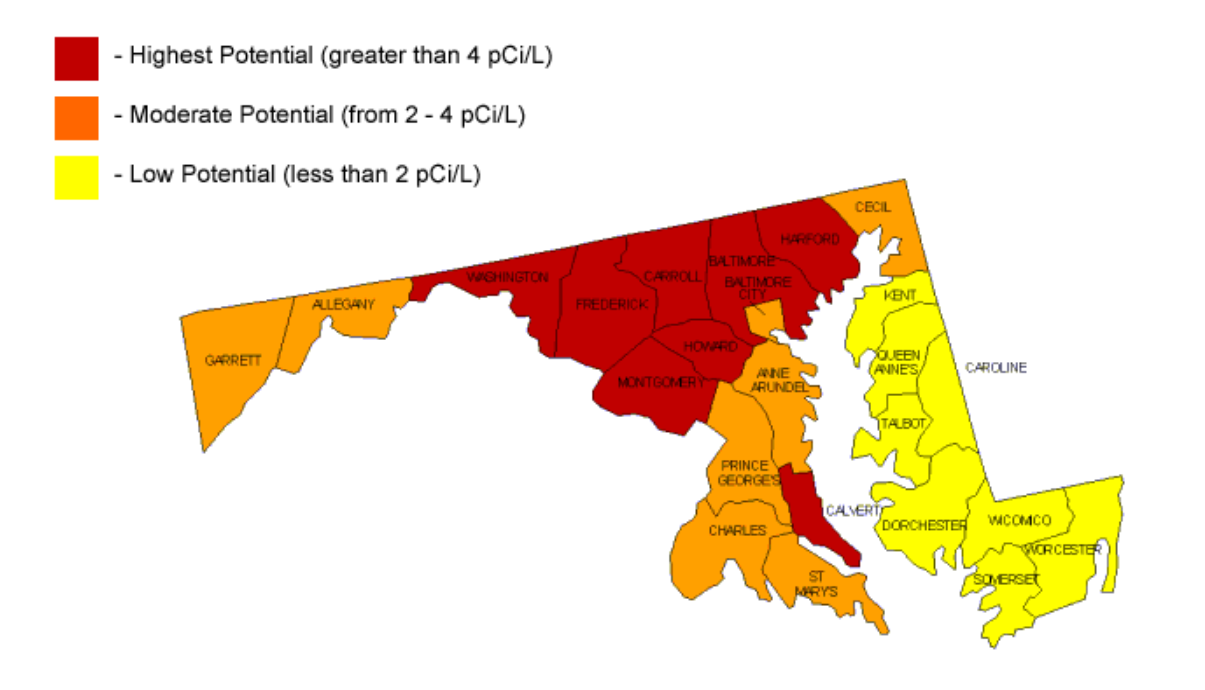
Radon is the #2 cause of lung cancer in this country--it is a silent killer. 
And Maryland--especially central Maryland--is in the moderate to high risk area. Benner GeoTech has mitigated non-smoking households where dogs have been diagnosed with lung cancer, and the probability of it being radon exposure is very high. Test levels have been seen in many local areas, including above 50 pCi/L in Montgomery County and even above 100 pCi/L in Frederick County. The EPA recommends remediation at levels above 4 pCi/L. For more information on remediation, visit the Benner GeoTech website.

At the end of the day, whether or not they are buying or selling home owners need to be aware of the risks associated with radon exposure. It is also highly recommended that ALL homeowners test for radon, even when off market, to protect their families and pets from this dangerous but all to common naturally occurring toxin.   

Saturday, August 9, 2014

What Makes Sense: BUY a Home or RENT From Someone Else?

Our local rental market is at a per square foot premium price. Financing rates are still hovering at favorable lows. Home prices are slowly climbing again, but remain quite reasonable. So what makes more sense--BUY a home or RENT from someone else? 

Image: The New York Times
While the decision is a multifaceted one for each individual--no two situations or scenarios are alike--I came across this really cool sliding scale style "rent vs buy" calculator in the NY times. This is a quite useful tool that breaks down the numbers that really matter in a very digestible and clear way. You can toggle and slide the factors on nearly all figures related to a real estate purchase, from purchase price to interest rate, years of amortization, and much more. It then calculates a payment threshold that says, essentially, that if you can rent a comparable home for less than X there is no rush to buy that same caliber of home--in that case renting makes more sense. The problem is that the rental costs in this area are surprisingly high--FAR higher than any price per square foot on the buying side of the fence. And unfortunately, "good" rentals (and the landlords that come with them) seem to be getting more and more scarce.

Of course buying a home represents a much larger commitment than renting. There are maintenance costs, future improvements, deciding upon geography, and the intimidation of simply having that "mortgage" payment vs. writing a rent check. But then again, as a homeowner, there is this amazing thing called an itemized tax deduction. <--If you have never experienced this, trust me that the year in which you finally do will be something you will always remember.

So what are the typical hurdles and doubts surrounding buying (especially as a first-timer) in 2014? And what solutions might there be? 

  • Not enough money for a down payment - There are many programs out there that will allow for 0% down payment, such as USDA funding and special portfolio programs offered by certain credit unions (you don't even have to be a credit union member in some cases!). And there is also always good old FHA, which is only a 3.5% down payment. Of course with all lending programs, there are qualification criteria and subject property restrictions, but the conventional wisdom ("back in my day" style...) of needing 10% or 20% down to get out of the gates simply doesn't apply to most people anymore.  
  • Not enough money for closing costs - Sellers can pay your closing costs. Period. I often get clients to the table with little out of pocket, because we structure the offers to include full closing. It is often "built in" to the sale price, but at the end of the day, getting that $10,000 in closing help at 4 3/8% and wrapping it into a 30 year mortgage = only $49 per month more in a payment. Compare this to coming up with $10,000 to bring to the table and it is often a no-brainer. Mind blown? 
  • Perceived inability to qualify for a mortgage - Have you ever talked to a lender? I always recommend a "preemptive strike" with one of these folks months (or even years) before you really think you want to buy a home. A good lender is more than willing to check out your current financial picture, tell you what they see, and give you longer-term advice and directives to get you on the road to home ownership in the future. Simply put, much like with us Realtors, the good lenders know that the real estate relationship is a marathon, not just a slam dunk sprint. They will hang with you through the years leading up to your ultimate buy. 
  • "I'm too young to buy a house" - There is nothing unusual anymore about being in your early to mid twenties and buying a home. Nothing. You do not have to wait to get married, or to make over $50K per year, or pay off your student loans first, or ... Young people who understand the process and stay on top of their financial picture can get a jump start on their financial solvency. Many buy their first home with the intent to grab a roommate or two to help adjust to the monthly mortgage, living in their own home for less than rent--often living "rent free" while their roommates pay for them to essentially own a home. Not to mention they then also reap the rewards of their tax write off each Spring <--money they can then save, invest, or apply toward additional home improvements to build equity.
  • Perceived "low" credit score/credit blemishes, including foreclosure/short sale/bankruptcy - No two credit histories or profiles are the same, and folks with credit issues--past and present--still buy houses. Every. Single. Day. The right lender will take your profile, ask the right questions, tell you what options you have, OR in the worst case, make real-world suggestions as to how to get your credit back on track in a specific period of time. Quite often, your credit isn't as bad as you think it is. The credit scores you pull as a consumer vs. the scores they pull as lending professionals are not always the same. 
  • NO credit history - Maybe you have intentionally resisted having any credit cards, got your vehicle as a gift from your folks (and plan to ride it into the ground), and/or have no referenceable rental payment history. This can be a tough one, and another great reason to consult with a lender early in the process (long before "window shopping" specific properties and making a wish list) to determine the best way for YOU to build a credit history worthy of lending. There are ways to build one fairly quickly and your lender will know for certain. And please don't trust everything you read on Google.  
At the end of the day, it just doesn't make sense for everyone to buy a home--"American Dream" or not, there are simply some folks who should never make that kind of commitment, period. But for the majority of regular income earners, the numbers on moving into a home of your own vs. renting don't lie. With the right advice and some preparation and planning, buying a home just might be one of the smartest decisions you will ever make. :)


Thursday, May 15, 2014

Lyme Disease in Maryland: Protecting Family, Pets & Self

I took my faithful fuzzbucket to the vet for his annual shots and checkup today, and living in Maryland, we naturally covered the topic of Lyme disease. Not sure why, but I had always thought that it was the smaller deer ticks that were the exclusive carriers of Lyme, and I treated those buggers differently when removing one from a pet or person. I would sanitize everything in sight, and use an inside out sandwich baggie to carefully remove them/dispose of them without touching them. I learned today that regular American "dog" ticks here in Maryland CAN carry Lyme too--not just Rocky Mountain Spotted Fever. So do Lone Star ticks, brown dog ticks, and of course the usual suspects, deer ticks. Basically, if you live in Maryland, and see a tick (and you WILL see ticks!), there are odds it is potentially infected with Lyme. Period.   
Lyme Disease Primer...
  • Over 95% of all Lyme disease cases can be found in Connecticut, Delaware, Maine, Maryland, Massachusetts, Minnesota, New Hampshire, New Jersey, New York, Pennsylvania, Vermont, Virginia and Wisconsin.
  • Lyme disease is a bacterial infection that initially causes fever, chills, headache, muscle and joint pain, and swollen lymph nodes.
  • Only 80% of Lyme disease infections actually cause that hallmark "bullseye" rash. It is typical to have contracted Lyme WITHOUT seeing any rash (or to have simply not seen it, as the rash can be anywhere on your body).  
  • Scientists believe that an infected tick must be attached for 36 to 48 hours or more before the Lyme disease bacterium can be transmitted. However, it is also proven that not "all" deer ticks (or others) are carriers of Lyme. 
  • Blood tests often give false negative results during the first few weeks after exposure to the disease. During that time the body is still reacting and responding to the infection. However, most doctors will prescribe treatment for "suspected" Lyme disease even with a false negative blood test.  
  • Up to 20% of Lyme disease patients will have post-treatment Lyme disease syndrome, including persistent fatigue, pain, or joint and muscle aches. Experts believe that these symptoms are the result of tissue damage during the infection (vs. a chronic infection).
  • A Lyme disease vaccine for humans is no longer available due to lack of consumer demand. 


Avoiding Infection...
  • Finding and removing ticks is THE best way to prevent infection, even if you were bitten. Even if it is later in the day, ALWAYS have someone literally check you for ticks. ;) A day later is NOT too late!
  • You can help to avoid tick bites by wearing long protective clothing and applying tick/insect repellent. 
  • Keep pets safe by checking them the same way you check yourself and others when they come inside. Animals are often convenient carriers for ticks, bringing them into your home where they can attach themselves to individuals who have never even been outdoors recently.   
  • Tick bites on pets are hard to detect, and signs of disease may not appear for 7-21 days. Watch your dog closely for changes in behavior or appetite (see "know the signs" in graphic above).
  • Talk with your veterinarian about using popular tick preventive treatments, as well as other natural insect repellents like essential oils. Note: Use caution and common sense--just because a product is "natural" does NOT mean harmless or safe for animals! Discuss ALL products with your veterinarian.
  • Ticks live in moist and humid wooded or grassy areas. To avoid ticks, walk in the center of trails and avoid tall vegetation. Keep your yard well-trimmed. 


Sources: 

Monday, January 6, 2014

Unusually Bitter Temperatures Coming to Maryland: Be Prepared!

In case you haven't heard, here in Maryland the mercury is expected to take a uncharacteristic nosedive for a short period of time and the winds will be picking up. This deadly combination is expected to bring conditions well below zero, and in some locations they might be shattering low temp records that have stood for over 20 years in the process. It is a pretty unusual scenario for us Marylanders, and this same system has already created extremely hazardous conditions out West--even in places where they are used to such extremes. Here are some things to consider as you prepare to hunker down:

  1. Take in ALL animals. No living creature should have to endure such conditions. If you have outdoor cats that can't be located, be sure to provide adequate insulated shelter for them near your home that they might use should they come home and are not seen. 
  2. Make sure your elderly loved ones and neighbors are taken care of and have back up heat sources and emergency call plans ready to go in the case of heat system or power failures.
  3. Have an emergency kit accessible in the event of a power outage. Battery operated lighting, a supply of bottled water, ready-to-eat meals, and extra blankets are great to have in an easy to get to location.
  4. Make sure your outside HVAC unit is clear of any icy buildup, and keep the inside temperature set at a reasonable level to avoid elevated risk of equipment failure.
  5. Be prepared for a possible failure with a safe back-up heat source plan, as traditional heat pump systems may have a hard time keeping up with this kind of cold. 
  6. If you are heating your home with fossil fuels (wood, gas, etc.) or supplementing your normal heat source, be sure to test your carbon monoxide detectors before you fire them up.
  7. Limit the opening of any exterior doors and consider temporarily taping over any doors or windows (or unused fireplaces) you know are drafty with plastic sheeting and painters tape (or any other easy-release tape). Some other suggestions from the CDC can be found here: Be Ready for Winter.
  8. Have a solid emergency plan in place (that all family members know) for extended power outages or heat system failures. Identify an alternative place within a 10 mile radius where you can take shelter until the conditions subside. 
  9. If you have to drive anywhere, make sure your vehicle is up to the task: Antifreeze level is adequate, gas tank is on the full side (to avoid potential icing of tank/lines), and that your windshield fluid is full-strength (and not mostly water). Be sure to have your cellphone charger, a flashlight, blankets and warm layers of clothing (and preferably something reflective) to put on if you had to walk anywhere or shelter in place. 
  10. If you have to be outside, wear properly rated cold weather gear, and know the warning signs of hypothermia and frostbite. Seek medical assistance immediately if you think you may be at risk.

Stay warm!

Monday, December 30, 2013

A "To Do" List for End-Of-Year 2013: 10 Important Things to Consider

  1. Spend those last FSA dollars. If yours don’t roll over or have any grace period (as some accounts now do for a certain portion), "use it or lose it" on vitamins, contact lens/eye care, first aid supplies (update that kit!) and more.
  2. Prepay any tax-deductible bills that are due in January. Your mortgage, student loan payments, etc. Paying by credit card is a great way to document it in 2013 (but the IRS also says as long as you mail the payment in 2013 you can claim it).
  3. Review your employee filing status/payroll deductions and related contributions. Notify your HR team of any requested changes for 2014 immediately.
  4. Review and update your will. Everyone needs to have a will. Don’t have one or want to start fresh? Here are some online will creation resources to consider:
  5. Review your insurance policies. Look at coverage limits and deductibles for auto, homeowners, life, and umbrella policies.  
  6. Clear out the clutter and leave 2013 behind. Use the classic triple-threat auditing system of "keep," "donate," and "trash," and apply this logic to everything from clothing and toy bins to junk drawers and old “keep” storage boxes.
  7. Make your final donations (clothing/household items or cash) to the non-profit of your choice. Be sure to document your haul and get that receipt: http://www.irs.gov/uac/Newsroom/IRS-Offers-Tips-for-Year-End-Giving-2013
  8. Organize: Decide on a filing system (for this tax year, be it a spreadsheet or a shoebox) and create/share your household calendar for 2014. Consider smartphone sharable formats like Outlook or Google, or stick with a good old fashioned bound day planner that is kept in a central location in your home.
  9. Decide on that resolution for 2014. Is it a new mantra? Or is it something more specific or goal-oriented? Write it down and keep it in a place where it won’t get lost in the shuffle and forgotten sooner than later.


Monday, December 31, 2012

2013: Skip the Resolution, Adopt a Concept Instead

-->
It's that time of the year again! So what is your big resolution for 2013?
  • To put money into a special savings account (or under your mattress) each week?
  • Going cold turkey on: junk food, or artificial sweeteners, or chocolate, or smoking, or Internet dating, or ... ? 
  • To lose 20 pounds by: Valentines Day, which on Feb. 14th becomes St. Patrick's Day, which morphs into 4th of July ... ? 
  • To resolve NOT to have a resolution because they are cliche?
Why not try something different in 2013?


Instead of jumping on the resolution bandwagon (and more than likely having it go by the wayside in the first few weeks) consider adopting a single, meaningful word/concept, and make it your year-long mantra. Personally, I will be working on EFFICIENCY in 2013. On a daily basis, I will apply this principle to everything from money matters, to business/personal relationships, to my career, and beyond. 

I will start off tomorrow morning by taking down a list of ways (both broadly and perhaps specific examples) in which I have not been efficient in 2012. I will take about 1/2 hour to do an initial list, leaving room to write a solution below each one. I'll add to the list throughout the day (as choices/behaviors come up), and at the end of the day, I will review my list. I will add a solution below each item: The solution would equate to the way in which I would do it differently, more efficiently, in 2013. I will likely take a look at my list from time to time to refresh my thinking as the days turn into weeks, and into months.

So how do I envision EFFICIENCY might translate into everyday life?
  • I will strive to be more efficient in my professional life/my career. I will actively work to find that delicate, yet achievable balance between rushing into action without an intelligent plan, versus spending so much time on a plan that it leaves limited room for rubber hitting the road.
  • I will approach exercise and general wellness with efficiency as both the driver and a goal. Planned workouts that are short on time invested, yet intense enough to make an impact, that will provide the maximum bang for my buck.

  • I will strive to handle my personal and business finances in a more efficient manner. Taking a strong look at where to spend money and ways to make my dollar stretch – especially in this impending doom and gloom economy. 
  • I will look at food as fuel and as something that should, in effect, help my body to operate efficiently. This can also easily translate into a positive change re: money spent on those same food choices.
  • I will apply efficiency to my general thought process. Instead of spending time and emotional energy dwelling on something negative, I will spend that same time figuring out solutions and/or ways to move on swiftly.
And so forth. With one word front-of-mind, and a concept that is translatable across so many broad and specific facets of day-to-day living, my hope is that it will not only be easier to recall and stick to, but will deliver so much more quality to my life than a single (possibly empty) promise to myself. 

What single word/concept will be your foundation in 2013?